5 Legitimate Use Cases for Buying Social Media Accounts
Marketers, agencies and developers buy social media accounts for reasons that are mostly boring. Here are five of them, and what each one actually needs from an account.
Key Takeaways
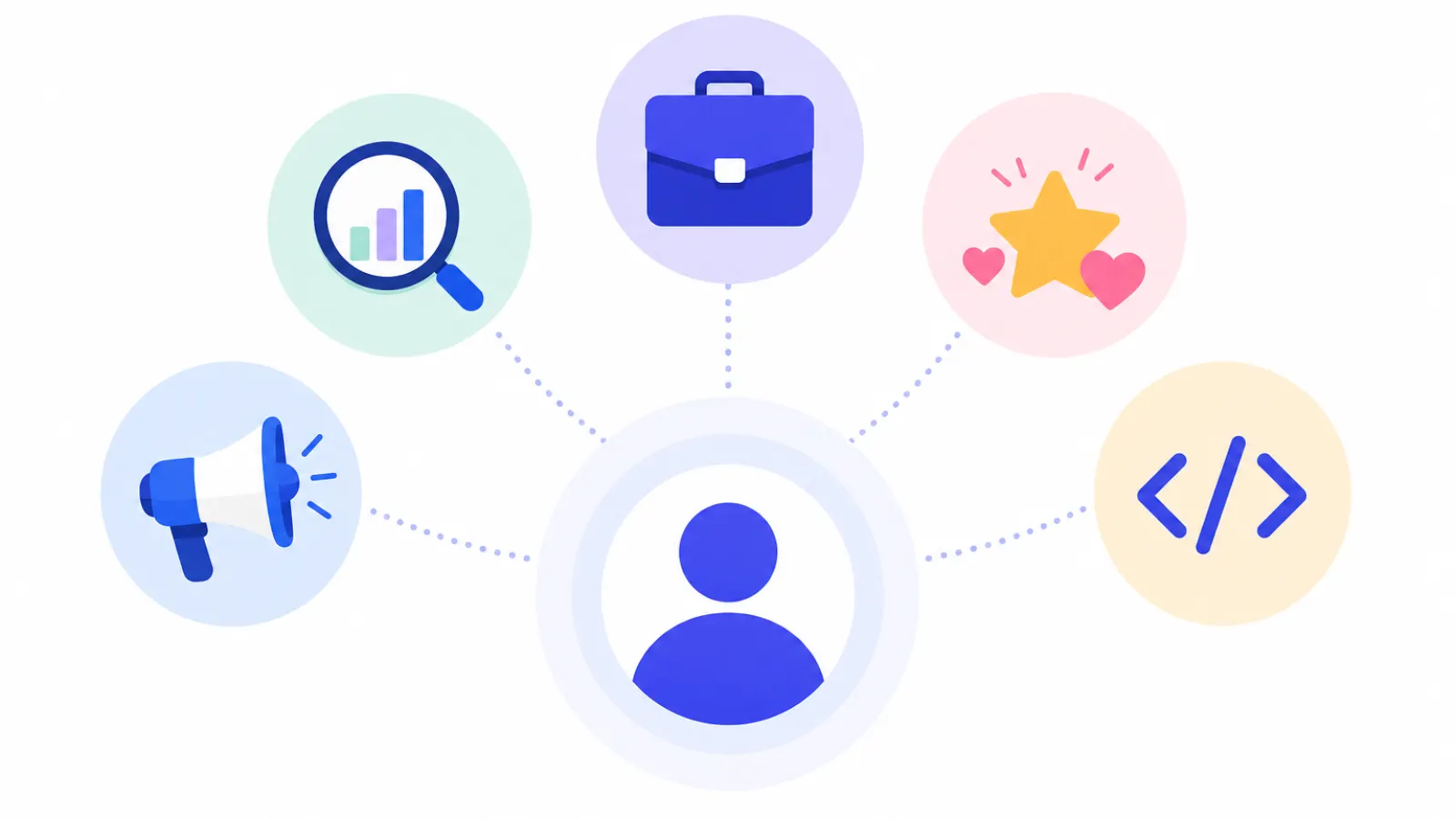
- Five legitimate uses: A/B testing, market research, agency multi-account workflows, campaign seeding, and integration testing.
- Multiple independent accounts let marketers isolate variables a single account can never test cleanly.
- Agencies split client work across separate account pools so one ban stays one ban.
- QA and integration teams need real, disposable accounts to test social features without risking the company account.
- The thread running through all five: accounts as operational infrastructure, not impersonation.
The phrase does most of the damage. "Buying social media accounts" sounds like something shady, so people assume it is, and that assumption survives contact with almost no evidence.
Look at who actually buys. Marketing teams, agencies, researchers, developers. The reasons are boring, which is rather the point. Five of them, below.
1. A/B Testing Marketing Campaigns
A real A/B test needs accounts that don't know about each other. Two content strategies, two ad formats, two outreach angles, running at the same time on profiles that share nothing. Two profiles hanging off your main business account will never give you that, because they aren't independent and the platform knows it.
Softreg accounts are built for this job. Run five variations across five separate accounts, watch which one the algorithm actually rewards, keep your primary accounts out of the experiment entirely. Speed is the real benefit. Organic growth cannot hand you a clean comparison this month, and by the time it could, the answer has moved. Test finishes, you learned something or you didn't, next round starts on fresh accounts.
2. Market Research and Competitive Intelligence
You can't see what a segment sees unless you're standing inside it. A fashion brand wants to know what Instagram feeds a 22-year-old in Berlin. A media buyer wants to watch how a competitor's posts land with a demographic that isn't theirs. Neither of them finds that out from the corporate account, which has spent years being trained on their own behavior and now shows them a mirror.
Aged accounts carrying regional history or a particular activity pattern work as research instruments. Not perfect ones. But an honest look at the feed from somewhere other than your own desk beats a guess, and there's no other way to get it.
3. Agency Multi-Account Workflows
Agencies running dozens of client accounts have a structural problem, not a marketing one. Client work has to stay separated from other clients and from anything internal, while the team still needs to move fast across all of it.
So they buy buffer accounts. Separate profiles for scheduling, monitoring, commenting and engagement, none of them wired straight into a client's brand account. Ordinary practice in professional shops. Client-facing accounts stay clean, and one ban stays one ban instead of turning into an incident report and an awkward call.
4. Influencer Campaign Seeding
New content needs a floor of social proof before an algorithm will carry it anywhere. Aged accounts with genuine post history and real follower counts produce early engagement that reads as engagement. Obviously fresh accounts don't.
This matters most on platforms that weigh early engagement velocity when deciding reach. A thoughtful comment from an aged Instagram account has algorithmic weight behind it. The same comment from a day-old softreg has almost none.
5. Platform Integration Testing
Anyone building against a social API needs accounts to build against. Testing on your personal or company profile is a bad trade: one loop that forgets to stop, one batch of malformed requests, one rate limit hit at the wrong moment, and the account you actually care about is flagged.
Dedicated test accounts solve that. Cheap softreg accounts existing purely for development get banned now and then and nobody minds, because that's a recoverable loss. Your main business account is not.
The Common Thread
All five come down to the same thing: operational flexibility and risk isolation, at a speed organic account growth can't match. That's infrastructure, not impersonation. The line between them isn't blurry either. Running tests, containing client risk, or seeding a launch is ordinary business. Posing as a real person who exists is fraud, and no marketplace can make that call on your behalf.
Not sure which account type suits what you're doing? The Accstall FAQ answers most of it, and the catalog runs across Instagram, Facebook, X and the rest.