Best Proxy Types for Social Media Automation in 2026
Bad IPs kill more purchased accounts than bad accounts do. Datacenter, residential and mobile proxies compared on price, trust level, and which platforms each one is actually safe on.
Key Takeaways
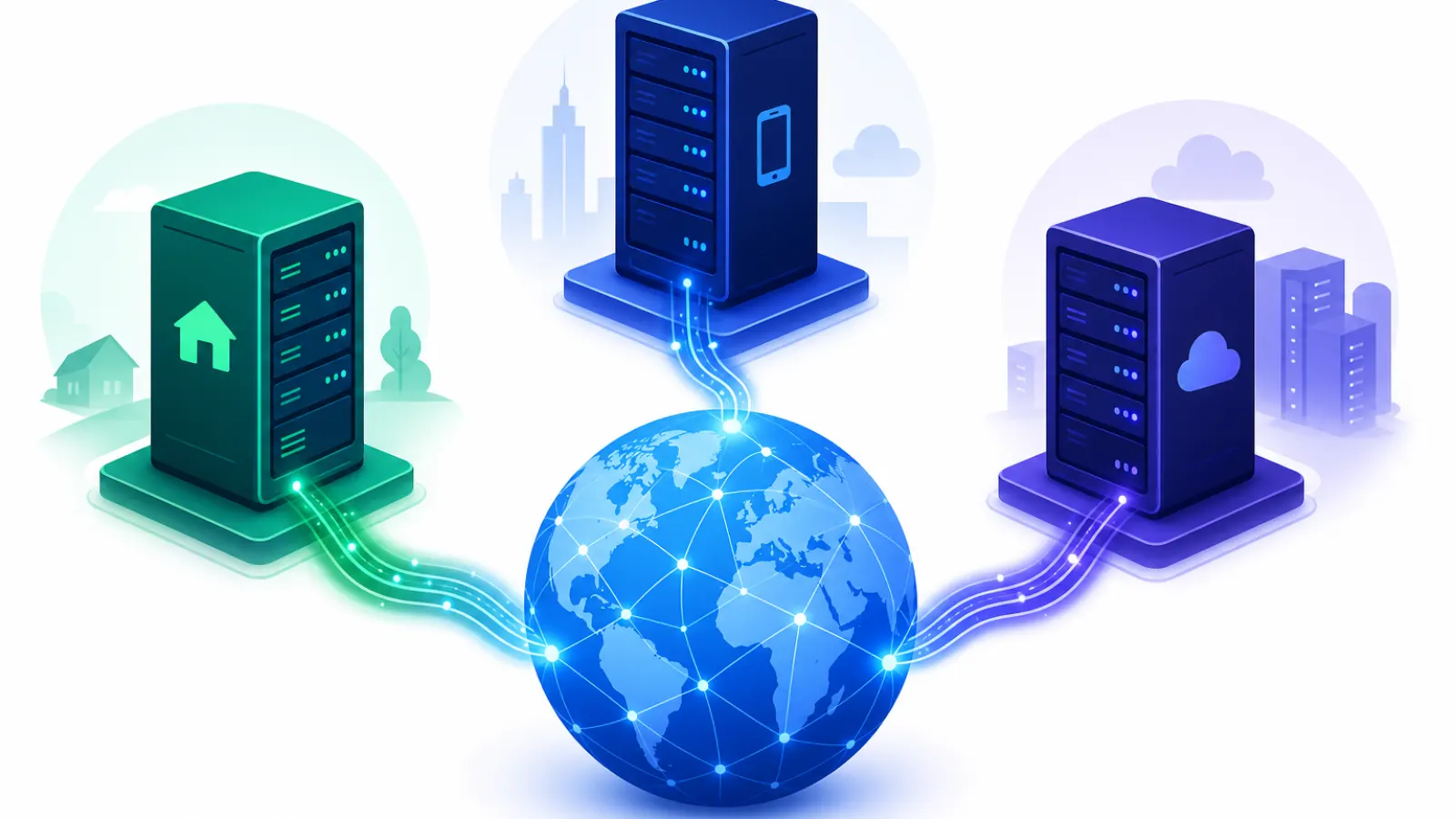
- Datacenter proxies are fast and cheap, and easy to spot. Platforms keep current lists of datacenter IP ranges.
- Residential proxies are the workhorse for social media: real ISP addresses at a price most operations can carry.
- Mobile proxies carry the highest trust because carrier IPs are shared by thousands of real users. Save them for accounts you can't lose.
- Match the proxy region to the account's region. Mismatches trigger verification prompts and locks.
- One account, one dedicated proxy. Sharing an IP is how one flagged account takes the others down with it.
Almost nobody burns through a batch of accounts because the accounts were bad. They burn them on bad IPs.
Proxy setup is the cheapest line item in a multi-account operation and the one that decides whether the rest of it survives. Get it wrong and the money you spent on good accounts evaporates quietly, one checkpoint at a time. Three types matter. Here's where each earns its keep.
Datacenter Proxies
These come out of cloud server infrastructure. AWS, OVH, Hetzner, the usual names. Fast, cheap, available in absurd quantities: a dedicated datacenter IP runs about $1–3/month, and shared pools go lower than that.
Now the catch. Platforms know precisely what a datacenter IP looks like, because those ranges are public and finite. Instagram, Facebook and X keep updated lists and treat anything arriving from them with extra suspicion. A brand-new Instagram account signing in from an AWS address, even one in the correct region, is far likelier to meet a verification checkpoint than the same account on a residential IP.
They're not useless, though. Datacenter still earns a place in a few spots:
- First-touch account verification, when you hold the email and can clear a checkpoint yourself
- Reading feeds, scraping public data, anything where losing the account costs you nothing
- Platforms that don't fingerprint IPs aggressively, like smaller forums and niche networks
On Instagram and Facebook with purchased accounts, treat datacenter as high-risk and budget for replacements. On X the risk is moderate, but it hasn't gone away.
Residential Proxies
Residential proxies push your traffic through real consumer connections: home routers, ordinary ISP lines. To Instagram's systems that reads like a person on their sofa opening the app. Gold standard, and the answer to most of what people ask us.
Cost is where it bites. Billing runs per GB, usually $5–15/GB from providers worth trusting, and media eats GB fast. Watch Stories all day and the invoice climbs. Blocking images and video in your automation setup takes an afternoon of engineering and pays for itself inside the month.
Reach for residential when you're doing:
- Instagram warm-up, then the day-to-day running of the account
- Facebook Ads accounts, where one lock costs you a whole campaign
- DM outreach that leans on the account looking trustworthy
- Anything you paid for and expect to still own next quarter
Mobile Proxies
Mobile proxies route through actual mobile networks, 4G and 5G SIM cards. Highest trust of any proxy type, and the reason is structural: a carrier IP gets shared by thousands of real people at once. Instagram and Facebook see a flood of legitimate traffic from those ranges, so they can't come down hard without taking real users along too.
They're also the priciest option, around $20–50/month per port, usually with a bandwidth cap on top. No good for volume work. For the handful of accounts that genuinely cannot die, they're the most reliable thing you can buy.
Where mobile makes sense:
- Expensive aged accounts doing work that actually matters
- Any account that already ate a checkpoint and needs to look boring for a while
- X operations, where trust score does more heavy lifting than anywhere else
Proxy-to-Platform Guide
| Platform | Minimum recommended | Ideal |
|---|---|---|
| Instagram (softreg) | Residential | Residential |
| Instagram (aged) | Residential | Mobile |
| Facebook (ads/BM) | Residential | Mobile |
| X / Twitter | Residential | Residential or Mobile |
| TikTok | Residential | Mobile |
| Datacenter (often fine) | Residential | |
| Discord | Datacenter or Residential | Residential |
The One Rule Worth Repeating
One proxy. One account. No exemption for quality.
Share an IP across several accounts and you've handed the platform a link between them, which is the exact pattern mass-bans are built on. Mobile and residential buy you nothing here. Isolation is a separate property from IP reputation, and confusing the two is how one flagged account takes the whole room with it.
With the proxy side settled, you need accounts worth running through it. We stock Instagram accounts across the range, from cheap softreg to aged profiles already warmed up.
Do the arithmetic once, because it's what changes minds: total up what a mass-ban costs you in accounts, warm-up time and lost campaign days, then look at the mobile proxy price again. It stops reading as expensive.