Is It Safe to Buy Social Media Accounts? Risks, Legality & How to Stay Safe
Buying social media accounts is safe when the seller is reputable and you lock the account down on arrival. Here's the legality question answered plainly, the four risks that are actually real, and the red flags worth walking away from.
Key Takeaways
- In most jurisdictions, buying an account breaks platform terms rather than the law. The practical risk is suspension, not legal trouble.
- The seller is the biggest real risk: outright scams, recycled credentials, and accounts reclaimed by whoever created them.
- Trustworthy sellers share three traits. Instant automated delivery, a written replacement policy, and listings that state what's included.
- Chat-only manual delivery and direct wallet transfers to strangers are worth walking away from.
- On delivery, change the password, take over the email, rotate 2FA, then log in from a clean, region-matched IP.
Yes, buying social media accounts is generally safe, provided you buy from a reputable seller, pay through a protected method, and secure the account properly after delivery. Almost every horror story you'll read traces back to one of two failures: a scam seller, or a buyer who skipped the basic security steps after purchase.
Three questions sit behind every version of this search. Is it legal, what can actually go wrong, and how do I avoid getting burned. Taking them in order.
Is It Legal to Buy Social Media Accounts?
Buying or selling an account is not a crime in most jurisdictions. There's no general law that makes the transaction itself illegal. What it does break is the terms of service of platforms like Instagram, Facebook, TikTok and X, all of which prohibit account transfers. That's a contractual matter between you and the platform, not a criminal one. Different problem entirely.
In practice, the main consequence of a transfer being detected lands on the platform side: a checkpoint, a restriction, or in the worst case a ban. Not legal trouble. Which means the way to minimize that risk is operational rather than legal, and the rest of this guide is the operational part. The usual caveat still holds. Whatever you do with the account afterward has to stay within the law, and the purchase itself is the easy part.
What Are the Real Risks?
You can't manage a risk you won't name. There are really four.
| Risk | What it looks like | How to reduce it |
|---|---|---|
| Scam seller | You pay and receive nothing, or dead credentials | Buy from a marketplace with automated delivery + replacement policy |
| Early flag / ban | Account restricted in the first days | Match proxy to region, warm up before heavy use |
| Recovery loss | Original owner reclaims the account | Change email + password + 2FA immediately on delivery |
| Payment exposure | Card details misused by a shady seller | Pay via escrow-style or crypto checkout, never direct transfer to a stranger |
Three of those four sit entirely in your hands. That's the good news. The fourth one, the scam seller, is decided before you've paid a cent, which is why sourcing deserves more of your attention than anything else on this page.
How to Tell a Trustworthy Seller from a Scam
Safety is won or lost here. A legitimate account seller will have most of the following. A scam will be missing several, and usually the same several.
- Automated, instant delivery. The system releases credentials the moment payment confirms, rather than "DM me and wait." Manual, chat-only delivery is the single biggest scam vector in this market.
- A written replacement or refund policy. Reputable sellers replace accounts that arrive dead, inside a stated window such as a 12-hour guarantee. No policy at all tells you what you need to know.
- Protected checkout: a real payment flow, crypto checkout or escrow, instead of a request to send money straight to somebody's personal wallet.
- Listings that say what's in the box. Mail access, cookie, 2FA, account age, region, all stated plainly. "Premium account" is not a spec.
- A real storefront. Categories, visible stock counts, published policies. A lone forum post or a Telegram handle loses that comparison every time.
Red Flags to Walk Away From
Any one of these is enough to close the tab. One is plenty.
- A price far below the market for that account type. A 5-year aged account going for pennies is bait, not a bargain.
- Pressure to pay outside the platform, or "friends & family" transfers that strip your buyer protection
- No replacement policy, or a seller who won't put the terms in writing
- Credentials that arrive manually, late, with an excuse attached
- Nothing you can verify before paying. No stock counts, no reviews, no history
How to Protect Yourself After Buying
A safe purchase turns into an unsafe one in the first ten minutes after delivery. Work through these in order. Don't skip one.
- Secure access first. Change the password, confirm you control the registered email, then set up or rotate 2FA so the original creator can't recover the account behind you.
- Log in from a matched environment. Region-matched residential or mobile proxy, consistent device fingerprint. Our guide on choosing the right proxy goes through the options.
- Warm up before pushing. Day one is not the day for heavy activity. The warm-up guide is written around Instagram, but the principle carries to most platforms.
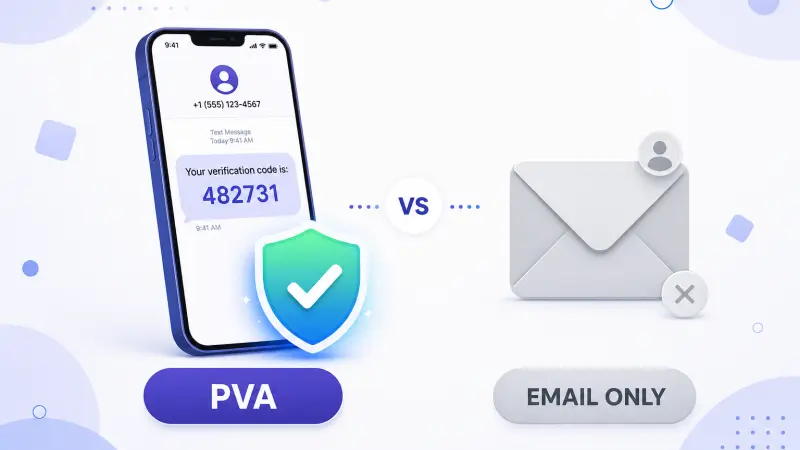
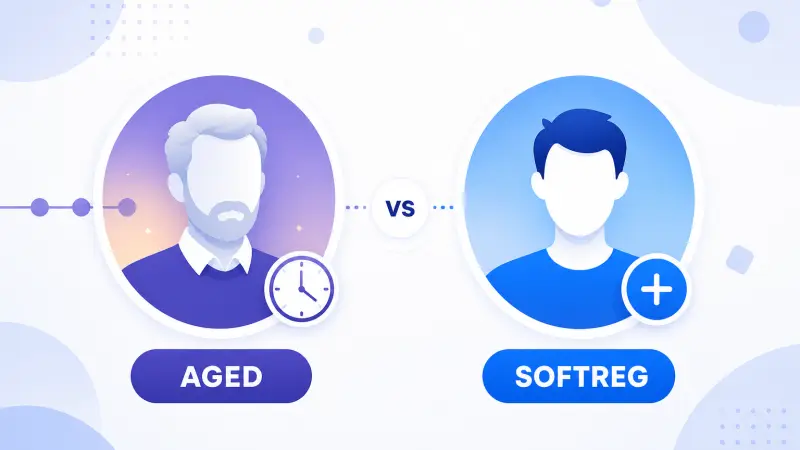
- Know what you actually bought. If the verification format matters for your use case, our PVA explainer and the aged vs softreg guide lay out the trade-offs.
Those safeguards are what Accstall is built around: automated instant delivery, listings that state what's included, a replacement guarantee, and protected crypto checkout. You can browse what's in stock and read the policies before you spend anything at all.
Frequently Asked Questions
Is buying social media accounts illegal?
No, the purchase itself is not illegal in most countries. It violates the platform's terms of service, which can lead to account restrictions, but it is not a criminal act. What you do with the account afterward must still comply with the law.
Can the original owner take the account back?
Only if you don't secure it. Change the password the moment the account arrives, take control of the registered email, and reset 2FA. Once all three recovery paths are yours, the previous owner has nothing left to reclaim it with.
What's the safest way to pay?
Use a marketplace with a real, protected checkout, meaning a crypto checkout or an escrow-style flow, paired with automated delivery. Never send money directly to a stranger's personal wallet. Never use no-protection "friends & family" transfers either.
Will the account get banned?
Not automatically. Bans usually come from operational mistakes, like logging in from a mismatched location or pushing heavy activity onto a fresh account. Region-matched proxies and a proper warm-up lower the risk dramatically, and neither of them costs much.
How do I know a seller is legitimate?
Look for automated instant delivery, a written replacement or refund policy, transparent listings that state exactly what's included, and a real storefront with visible stock. Chat-only manual delivery with no policy attached is the classic scam pattern, and it hasn't changed in years.